Part of our Woody Fragrance Family guide.
Sandalwood smells warm, creamy and soft, with a smooth woody heart that reads almost milky. It is sweet without being sugary, a little spicy, and quietly long lasting. Where cedar is dry and sharp, sandalwood is rounded and skin like, which is why perfumers lean on it as a base note that makes other ingredients feel richer and more polished.
That balance of softness and staying power explains why sandalwood works year round. It carries the warmth you want in cold weather while staying light enough for spring and summer, which makes it a reliable signature for anyone who wants one wood note they can wear in any season.

What Does Sandalwood Smell Like?
Sandalwood sits in a category of its own among woods. It is creamy, smooth, sweet and warm all at once, with a soft texture that some people describe as buttery or milky. There is a faint spice underneath and a gentle balsamic sweetness, but nothing harsh or smoky. Once you have smelled true sandalwood, it becomes instantly recognisable.
In a fragrance, sandalwood usually plays a supporting role rather than the lead. It blends beautifully with woody partners like cedar and rosewood, with earthy notes such as patchouli and vetiver, and with sweet, resinous companions like vanilla and amber. Paired with white florals such as jasmine, ylang ylang or orange blossom, it anchors the floral amber and floriental families. It is also a workhorse fixative that holds citrus and floral notes in place and stretches their wear time.
Mysore, Australian and Synthetic Sandalwood
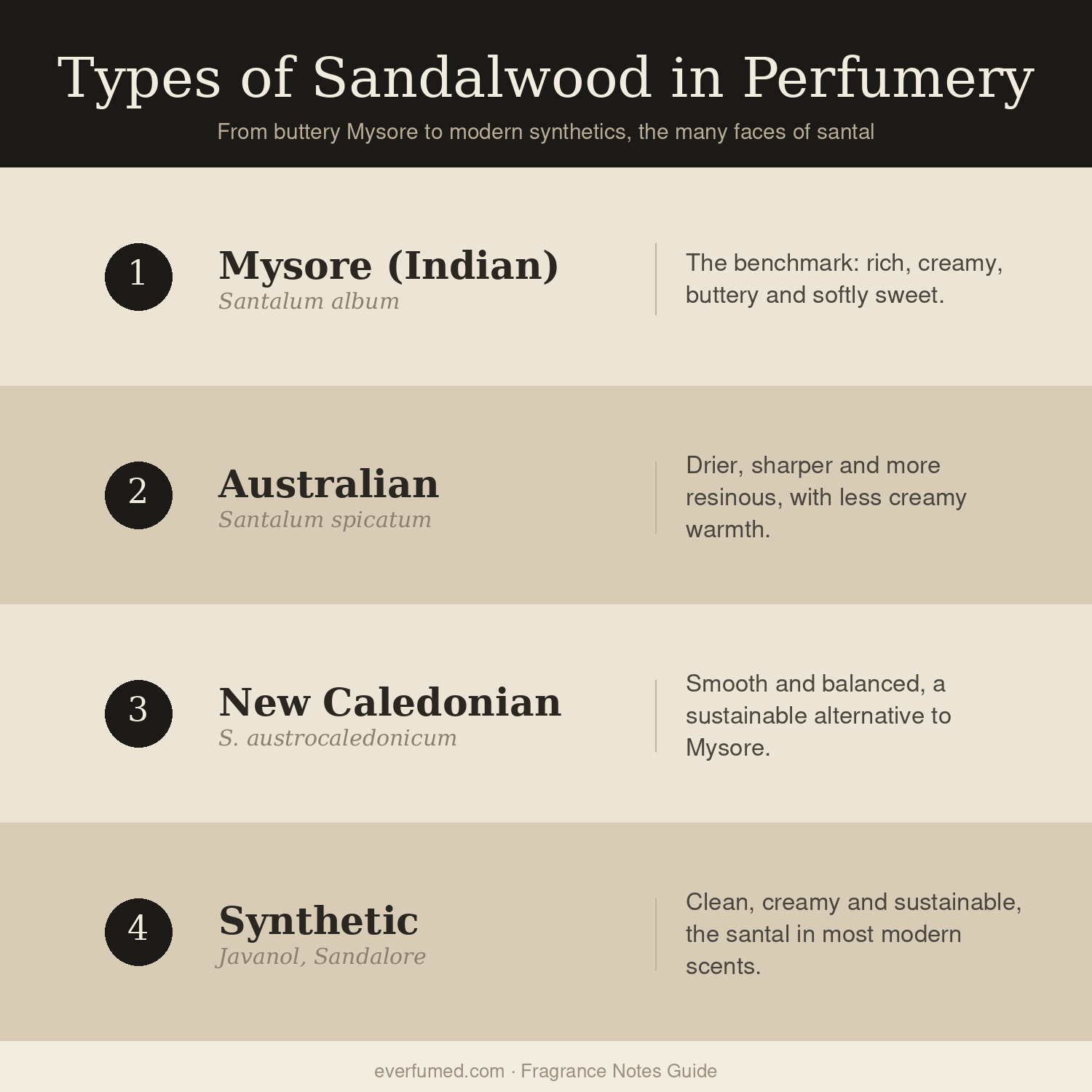
Not all sandalwood smells the same, and the source matters a great deal. Three types dominate modern perfumery.
Indian (Mysore) sandalwood, from the Santalum album tree, is the benchmark. It is the creamiest and most rounded, with that classic buttery warmth and remarkable depth. Decades of overharvesting made it scarce and expensive, and strict controls now limit its supply, so genuine Mysore sandalwood appears mostly in niche and vintage fragrances.
Australian sandalwood, from Santalum spicatum, is the sustainable workhorse of the industry. It is drier and slightly sharper than the Indian version, with a touch more resinous bite and less of that milky roundness, but it is responsibly farmed and far easier to source. Most contemporary sandalwood you smell at a fair price leans on this species.
Synthetic sandalwood molecules such as Javanol and Ebanol now appear in a huge share of fragrances. They recreate the creamy, woody effect cleanly and consistently, often with more projection than the natural oil. Many people assume synthetics are a compromise, yet skilled perfumers use them to build the polished, radiant sandalwood notes found in plenty of modern classics.

Where Does Sandalwood Come From?
The most prized sandalwood originates from the Santalum album tree of southern India. It grows painfully slowly and must be at least 15 years old before harvest. Because the fragrant oil concentrates in the roots, the trees are pulled up rather than cut at the base, which makes harvesting both labour intensive and costly. Sandalwood ranks among the most expensive woods in the world, and heavy demand pushed Indian sandalwood onto the threatened list, so its trade is now tightly regulated.
Today most commercial sandalwood comes from outside India, including Australia, Indonesia, Nepal, Sri Lanka and Hawaii. Australian plantations in particular have made sustainable sandalwood widely available, which is one reason the note appears in so many fragrances across every price point.
Sandalwood Fragrances Worth Smelling
Sandalwood shows up everywhere from cult niche scents to affordable everyday wears. A few stand out for showcasing the note clearly.
Le Labo Santal 33 is the modern reference point. Created by perfumer Frank Voelkl, it turned a smoky, leathery, almost rugged sandalwood into a decade defining signature that you now smell in cafes and lobbies everywhere. We cover it in depth in our Santal 33 guide, and Voelkl talks about his approach to woods and synthetics in our interview with Frank Voelkl. If the house intrigues you, our roundup of the best Le Labo scents is a good next stop.
Diptyque Tam Dao leans the other way, offering a soft, creamy, almost meditative sandalwood with a touch of cedar and rose. It is one of the cleanest expressions of the milky side of the note. Guerlain Samsara remains a classic pairing of sandalwood with jasmine, while drugstore and designer scents increasingly use synthetic sandalwood to deliver that warm woody glow affordably.

How to Wear Sandalwood
Because it sits low and close to the skin, sandalwood rewards a generous but not excessive application, with sprays to the chest and neck where its warmth can develop. It layers well, so a creamy sandalwood can soften a sharp citrus or add body to a thin floral. If you enjoy sandalwood, you will probably also like other warm woods, so it is worth exploring our wider guide to woodsy fragrances and the related note explainers for cedar and oud.
Frequently Asked Questions
Is sandalwood a masculine or feminine scent?
Neither, really. Sandalwood is one of the most unisex notes in perfumery. It anchors many men’s fragrances but appears just as often in feminine and shared scents, since its creamy warmth flatters almost any composition.
What does sandalwood smell similar to?
It shares the warm, woody family with cedar and rosewood but is far creamier and softer than either. People often compare its milky sweetness to a blend of warm wood, light vanilla and a whisper of spice.
Why is real sandalwood so expensive?
Indian sandalwood trees take well over a decade to mature, the oil sits in the roots so whole trees are uprooted, and overharvesting left the species threatened and tightly regulated. Scarcity plus slow growth keeps genuine Mysore oil among the priciest perfumery materials.
Does sandalwood last long on skin?
Yes. Sandalwood is a base note prized for its tenacity, often lingering for many hours and helping lighter top notes last longer too. That is exactly why perfumers use it as a fixative.

Born and raised in Austin, David is a dedicated writer and avid fragrance lover. When he's not trying out perfumes, he enjoys traveling and exploring new restaurants.