Part of our Incense & Resin Fragrance Family guide.
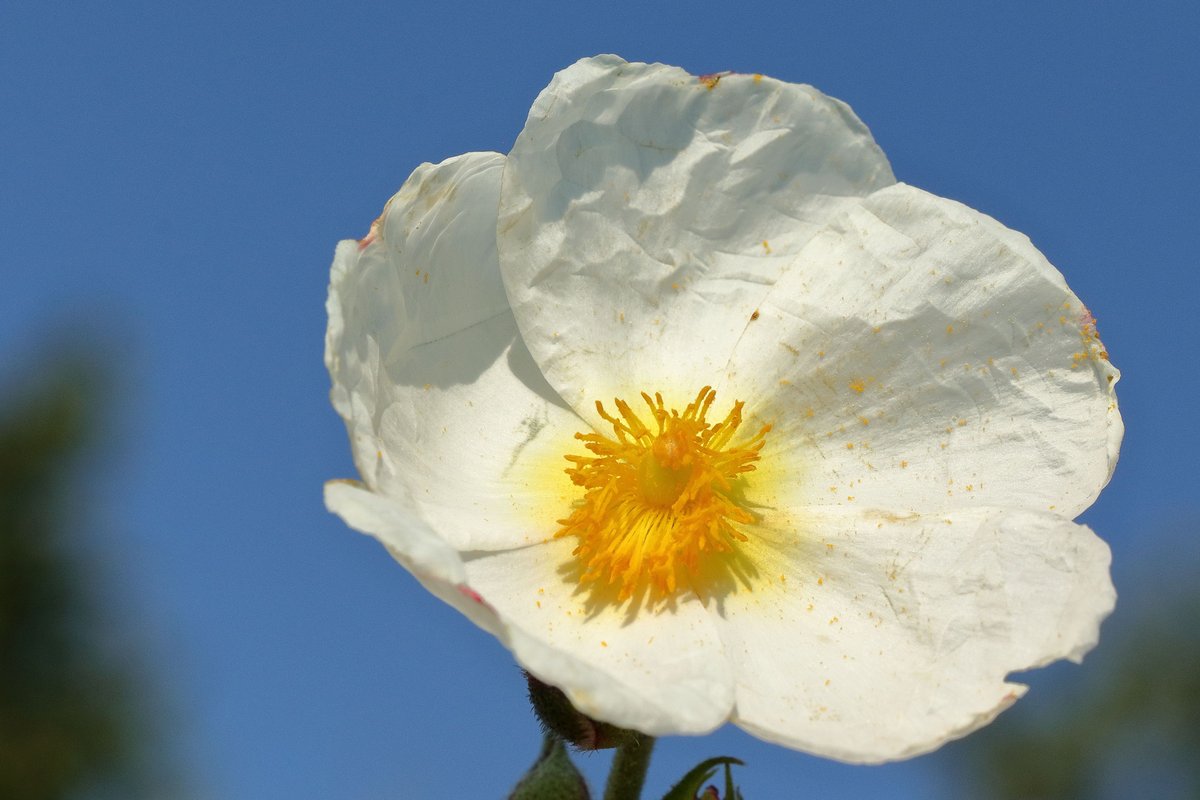
Labdanum is the warm, resinous heart of amber. Pressed from the sticky gum of the Mediterranean rockrose, it has perfumed incense and skin scent for thousands of years, and today it remains the single most important raw material behind the modern amber accord. Here is what labdanum actually smells like, and why perfumers reach for it whenever a fragrance needs depth, warmth and a little animal soul.
What Does Labdanum Smell Like?
Labdanum smells warm, sweet and deeply resinous, like sun-warmed amber with a leathery, honeyed edge. It carries facets of dried fruit, burnt caramel, soft tobacco and a faint animalic muskiness, all wrapped in a balsamic richness that feels dense and glowing rather than sharp. It is the smell most people picture when they think of “amber,” even though amber itself is a blend rather than a single ingredient.
Labdanum also spans a wide spectrum. At one end sits a bright, herbal, slightly green rockrose that smells almost medicinal and pine-touched; at the other, a dark, jammy, leathery amber that feels sensual and almost edible. Where a fragrance sits on that spectrum decides whether the labdanum reads as a fresh Mediterranean resin or a smoky, opulent base.
Labdanum in the Fragrance Pyramid
Labdanum is a classic base note. It is heavy, tenacious and slow to evaporate, so it settles into the foundation of a fragrance and lingers on skin for hours. Perfumers also prize it as a natural fixative, meaning it holds lighter notes in place and makes the whole composition last longer, which is why it anchors so many amber, chypre and amber scents.
Types of Labdanum in Perfumery
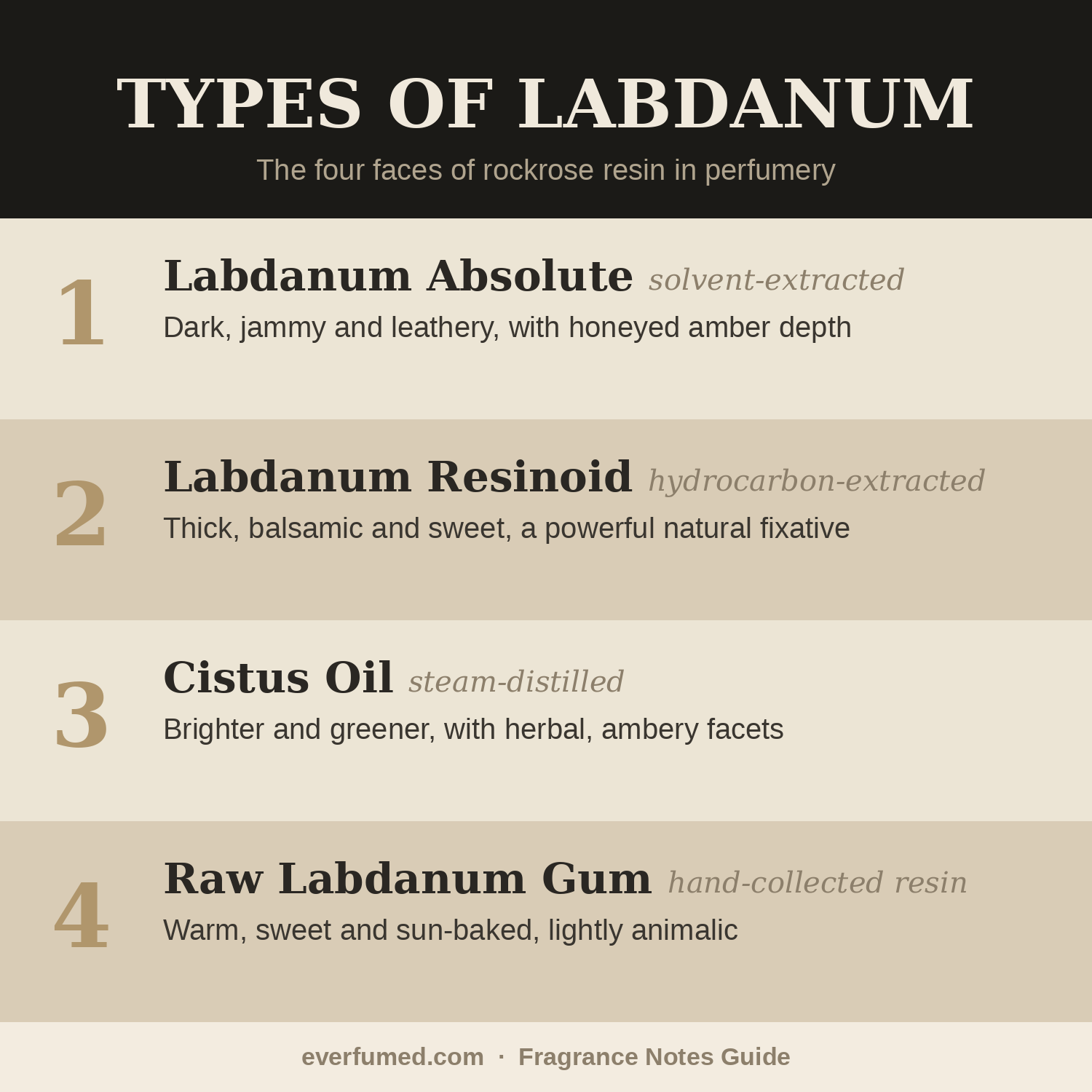
| Type | Character |
|---|---|
| Labdanum absolute (solvent-extracted) | Dark, jammy and leathery, with honeyed amber depth |
| Labdanum resinoid (hydrocarbon-extracted) | Thick, balsamic and sweet, a powerful natural fixative |
| Cistus oil (steam-distilled) | Brighter and greener, with herbal, ambery facets |
| Raw labdanum gum (hand-collected) | Warm, sweet and sun-baked, lightly animalic |
What Labdanum Pairs With
Labdanum is one of perfumery’s great blenders. It forms the core of the amber family, where it is layered with vanilla and balsams for that glowing, resinous warmth. Combined with bergamot and oakmoss it builds the classic chypre; with patchouli it turns darker and more earthy; and alongside incense resins like frankincense it deepens into something sacred and smoky. This versatility is why labdanum sits at the crossroads of the incense, amber and woody families.
Best Labdanum Fragrances to Try
Ready to explore labdanum and resinous amber scents? See our guide to the 10 Best Incense Perfumes.
Labdanum FAQ
Is labdanum the same as amber?
Not quite. Amber is an accord, a blend perfumers build to smell warm and resinous, and labdanum is the main ingredient inside it. Most amber fragrances lean heavily on labdanum, but they usually add vanilla, benzoin or other balsams too.
Where does labdanum come from?
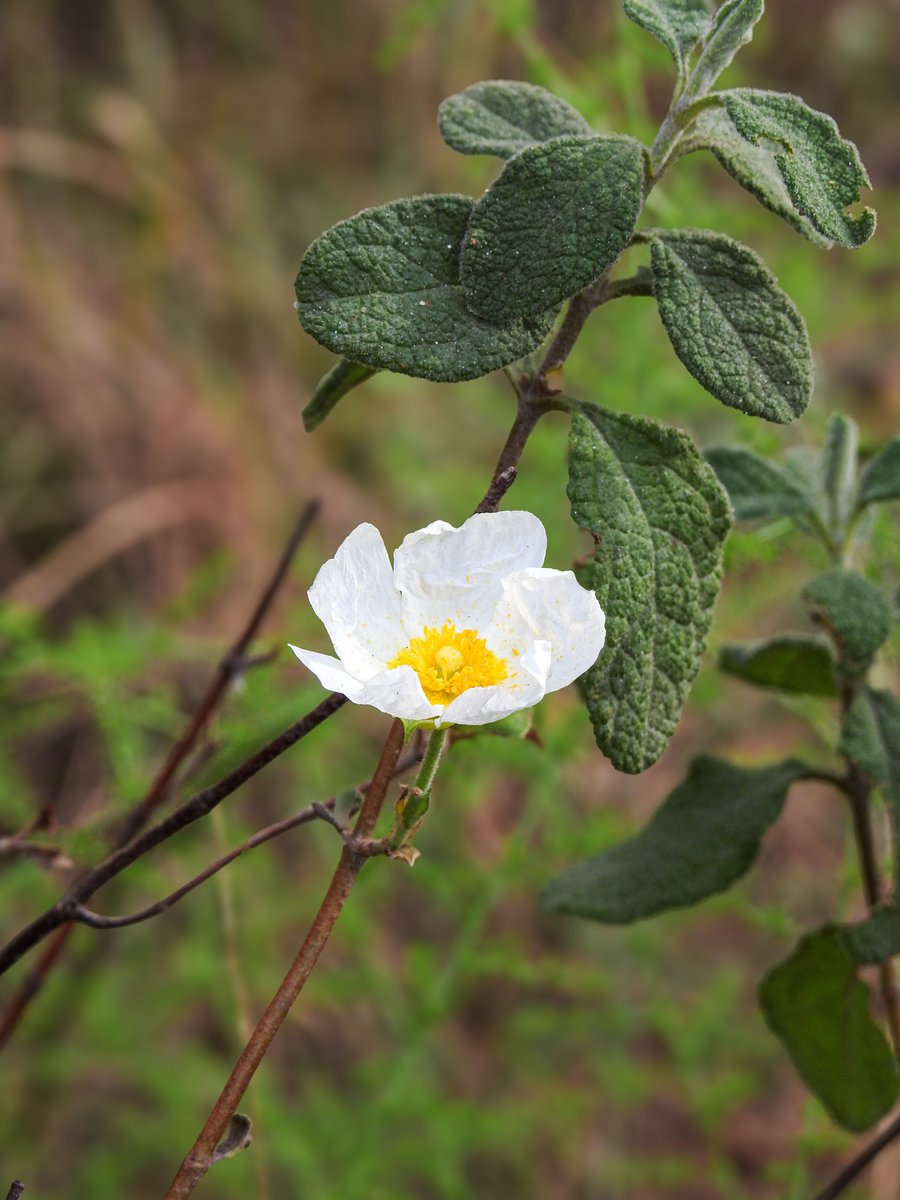
It is the sticky resin of the rockrose shrub, mainly Cistus ladanifer and Cistus creticus, which grow across the Mediterranean. Traditionally the gum was even combed from the coats of goats that had brushed against the plants in the summer heat.
Is labdanum masculine or feminine?
Both. Its leathery, ambery warmth appears in masculine, feminine and unisex fragrances alike. Labdanum is a foundational base note rather than a gendered one, and it works beautifully across the whole spectrum of perfumery.

Selena Marc is a fragrance enthusiast, freelance writer, and dog mom living in Houston, Texas. When she's not writing about her favorite new perfumes, you can find her enjoying yoga or a morning hike.