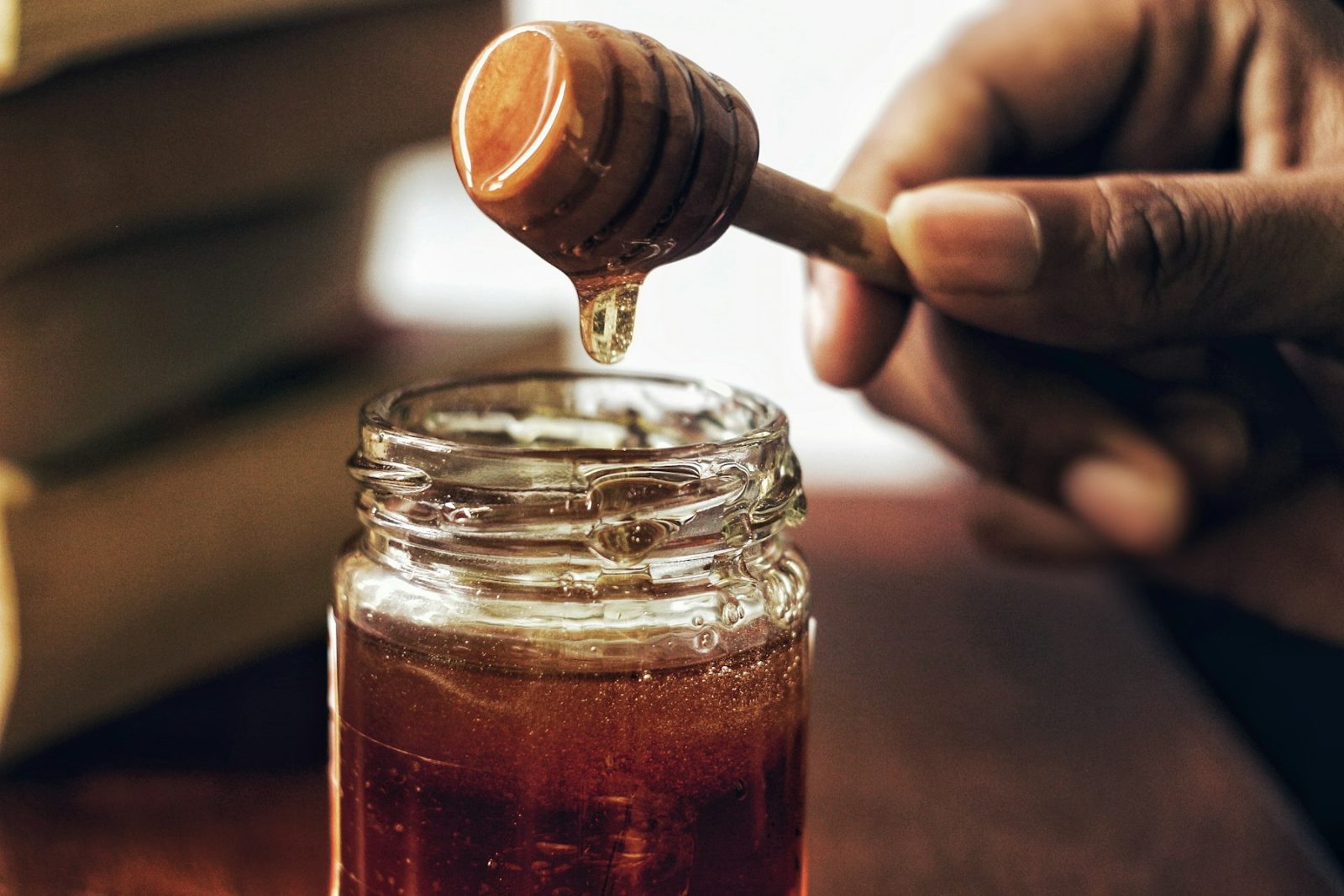
Honey smells warm, thickly sweet and waxy, with a floral, pollen-dusted top and — this is the bit nobody warns you about — a faintly animalic growl underneath it. It is the friendliest note in perfumery until roughly the twenty-minute mark, at which point a good third of you will decide it smells like the inside of a hive and the other two thirds will decide it smells like the best thing you’ve ever put on your wrist.
That split is the whole reason this page exists. It is very easy to meet one honey — the raw, dry-wood, unapologetically feral kind — and let it speak for the entire family. That would be lazy. Honey is not one smell. It’s a range that runs from linden-blossom lemonade to something that smells like it has been living in a beard, and everything that follows is about what decides where a given honey lands on it: which material was used, at what dose, and what was built around it.
If you’re new to the sweet end of the wardrobe, start with our guide to gourmand scents and come back — honey is the grown-up member of that family, the one that turns up to dinner smelling faintly of leather.
Origins: Where the Honey Note Actually Comes From
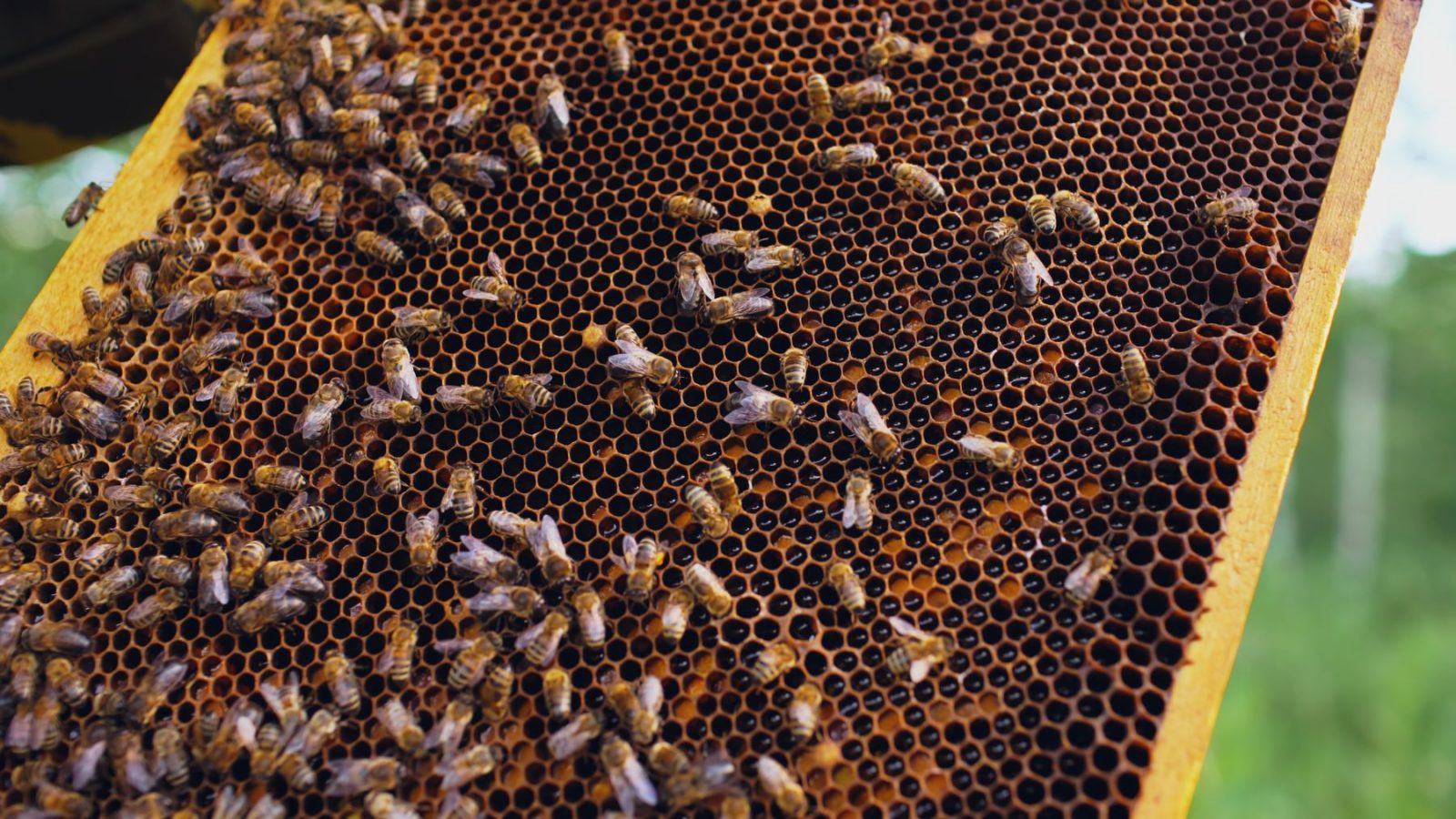
Here’s the thing that surprises people. Very little of the honey you smell in perfume is honey.
There are three routes to a honey note, and most modern formulas use all three at once.
1. Honey absolute
Made by dissolving honey — or honeycomb — in a volatile solvent, typically hexane, then filtering and concentrating it down to a concrete and on to an absolute (Première Peau). What comes out the other end is not squeezy-bottle honey. Première Peau describes the material as “thick, waxy sweetness cut with something feral… real honey in perfumery smells like opening an old wooden hive.” Expensive, low yielding, and the reason honey fragrances cost what they cost.
2. Beeswax absolute
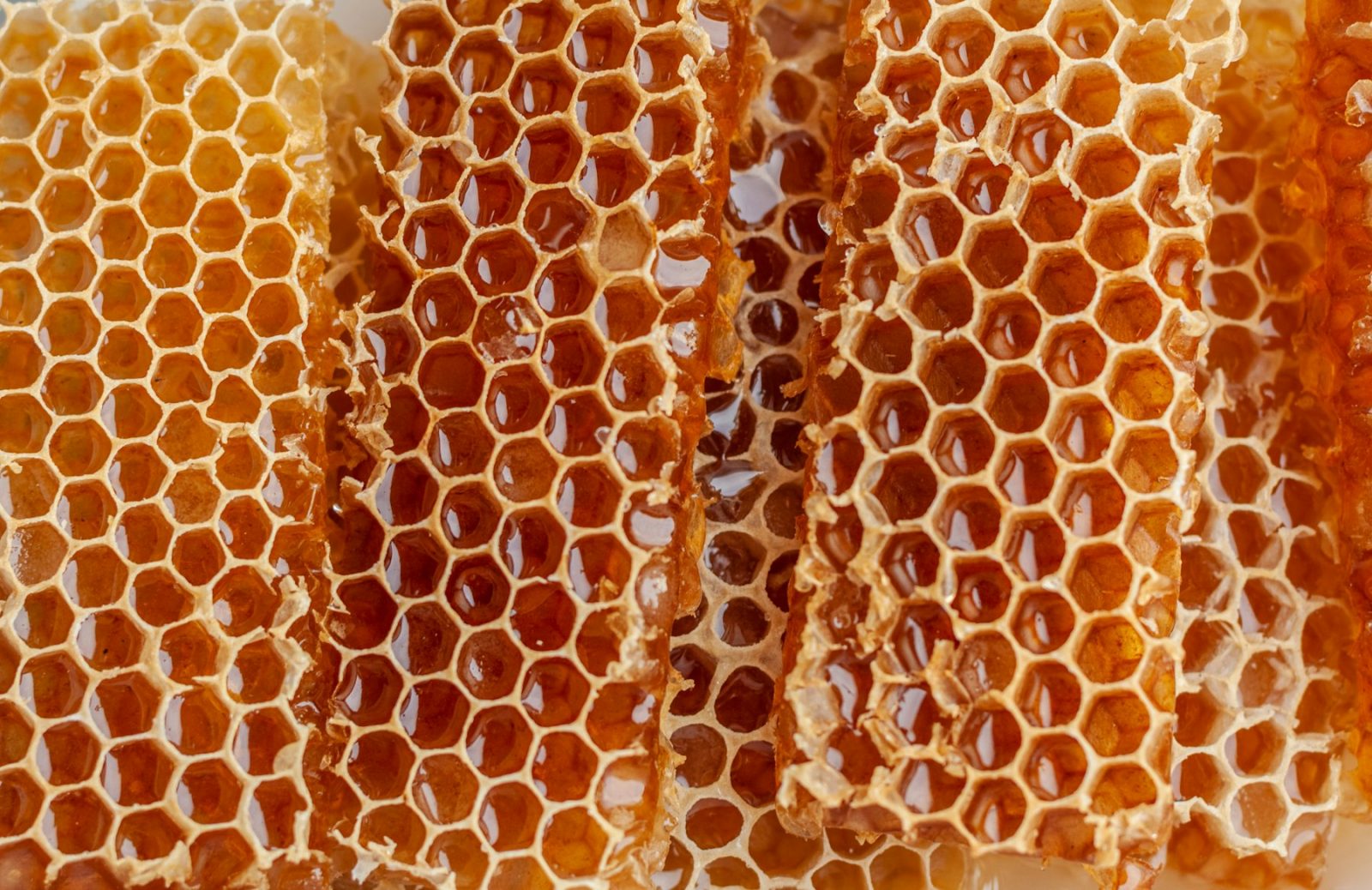
A different material entirely, and the confusion between the two is the single most common mistake in published note lists. Beeswax absolute is solvent-extracted from the combs themselves after the honey has been harvested — the combs are melted, filtered and extracted with hexane or ethanol, at a yield of roughly 0.5–1% from raw wax (Première Peau). Eden Botanicals describes the result as a “rich warm aroma… notes of sweet honey and pollen with a soft green hay-like body note and a mild, waxy undertone,” and attributes the fatty-waxy character to cerolein, a mixture of higher fatty acids in the wax (Eden Botanicals).
Short version: honey absolute is the sugar. Beeswax absolute is the texture. One tastes, the other touches.
3. Synthetic honey materials
The workhorses. Phenylacetic acid and its esters — methyl phenylacetate, ethyl phenylacetate — do most of the honey lifting in commercial perfumery, alongside proprietary bases from the big houses. Aurélien Guichard, whose Matière Première formulas run “between 85% and 92% natural ingredients”, is the exception rather than the rule; almost every honey you’ll smell on a department store counter is a synthetic accord with a whisper of absolute for realism.
What Does Honey Smell Like, Facet by Facet
Break a good honey accord apart and you get four things happening at once.
| Facet | What it smells like | Where it comes from |
|---|---|---|
| Sweet / syrupy | Warm liquid sugar, dried apricot, a touch of caramel | Honey absolute, methyl phenylacetate |
| Waxy | Candle stub, pollen, warm hay, a dry church-y quality | Beeswax absolute, cerolein-type fatty acids |
| Floral | Rose, jasmine, orange blossom, a nectar-like brightness | Phenylethanol, phenylacetaldehyde, the phenylacetate esters |
| Animalic | Skin, hide, urine, something unmistakably alive | Phenylacetic acid, p-cresol, indolic florals |
That fourth row is honey’s whole personality. Take it out and you have a rather boring caramel.
The Chemistry: Why Honey Smells Slightly Like an Animal
Honey’s animalic streak isn’t a perfumer’s affectation. It’s baked into the molecules.
Phenylacetic acid occurs naturally in honey — as well as in rose and narcissus — and is described by Première Peau as “honey-sweet, waxy, slightly animalic. Warm and golden at proper dilution,” used as a honey modifier at 0.1–1% in honey accords. At proper dilution being the operative phrase. Neat, it is closer to sweat than to breakfast.
Alongside it sit phenylacetaldehyde (green, rosy, honeyed) and 2-phenylethanol (rose-like), with the animalic depth reinforced by beeswax absolute or traces of p-cresol (Première Peau). Fragrenza’s raw-materials piece adds terpene alcohols — nerol, geraniol, linalool — for the floral nuance and benzaldehyde for an almond edge (Fragrenza).
On the synthetic side, methyl phenylacetate (CAS 101-41-7) is the big one: “intensely sweet honey-floral with jasmine-musky nuances, waxy-spicy undertones,” with an animalic drydown that means it’s usually kept below 1% in fine fragrance (Scentspiracy). Its cousin ethyl phenylacetate (CAS 101-97-3) is the gentler option — “intensely sweet with pronounced honey character; rich floral notes reminiscent of rose, jasmine, and orange blossom” (Scentspiracy) — which is why it turns up in muguet, rose and orange blossom compositions rather than in the dirty stuff.
Première Peau puts the tension about as well as it can be put: “golden on top, animal underneath — this is what makes honey a difficult note to dose correctly.”
The Honey Palette, Material by Material
Five materials, four qualities. This is the map worth carrying in your head before you read another note list — it explains at a glance why one “honey” fragrance smells like a candle shop and another smells like a stable.
- Form: small multiples of horizontal bar charts — four panels (one per quality), five rows (one per material), each panel on its own shared 0–10 scale.
- Why this form: the job is magnitude comparison across two categorical dimensions. A radar would flatter the data and lie about the axes; a grouped bar would need five cycled hues. Small multiples keep it single-series, so no legend and no colour-coding is required at all.
- Encoding: length = score. One hue only (
#2a78d6), because colour carries no information here. - Labels: every bar directly labelled — the scores are the point, and direct labels remove any reliance on axis-reading.
- Scale: 0–10, zero-anchored, gridlines at 0 / 5 / 10 only.
- Accessibility: single series, direct value labels, and the underlying table is printed below, so nothing is encoded by colour alone.
Data
| Material | Sweetness | Animalic edge | Waxy / textural | Floral lift |
|---|---|---|---|---|
| Honey absolute | 9 | 7 | 6 | 5 |
| Beeswax absolute | 6 | 5 | 9 | 3 |
| Phenylacetic acid (neat) | 7 | 9 | 7 | 3 |
| Methyl phenylacetate | 9 | 4 | 4 | 8 |
| Ethyl phenylacetate | 7 | 2 | 3 | 7 |
Scores are Everfumed’s editorial reading of the published odour descriptions cited above — they are a comparative guide, not laboratory measurements.
Look at the beeswax row. That 9 in the waxy column and the 3 in floral is exactly why beeswax alone never smells like honey — it smells like a hive. And look at ethyl phenylacetate: high sweetness, high floral, almost no animalic. That’s the safe honey. That’s the one in the pretty bottle.
The Dirty Honey Tradition
Every note has a rebellious wing. Honey’s is the biggest.
The reference point — the fragrance every honey conversation eventually crashes into — is Serge Lutens Miel de Bois (2005, Christopher Sheldrake), built on ebony, guaiac and oak woods, aquilaria, honey, beeswax, iris and hawthorn. Now Smell This called the opening “an extraordinarily harsh, almost caustic smell” of “heavy, very dry woods overlaid with raw honey,” and noted that the drydown is saved by the wood: “the sweetness is tempered by the wood, so that there is nothing candied or syrupy about it” (Now Smell This). The internet has spent twenty years arguing about whether it smells of urine. Those who “get” it adore it. Everyone else recoils. Both camps are correct.
Sheldrake did it twice more for Lutens and got away with it both times. Fumerie Turque (2003) runs white honey and beeswax through rum, dried currant, crystallised Turkish rose, tobacco, smoky leather and cade — Now Smell This describes the opening as “vodka-and-honey-soaked dried fruits” (Now Smell This). Chergui (2005) sets honey against tobacco leaf, hay, iris, rose, incense and sandalwood (Now Smell This). Neither is polite. Both are gorgeous. Between them they define the house style that every dirty honey since has been measured against: bury the syrup in dry wood or smoke and let only the resinous part survive.
The other great modern provocation is Maison Francis Kurkdjian Absolue Pour le Soir, which puts a rose-honey accord in the heart, cistus-labdanum beside it, a vanilla-amber base underneath — and cumin oil on top (Selfridges). Cumin. On top of honey. It is either the most confident thing in niche perfumery or an act of hostility, depending on the hour of the day and how close you’re standing. Either way it settled the question of whether honey could carry a composition on its own animalic terms.
Worth reading alongside this: Everfumed’s interview with Francis Kurkdjian, in which he explains that “oud was basically an alternative to me for using the animalic notes that are more and more forbidden in perfumery.” That single sentence explains an enormous amount about why honey has become so precious to perfumers — as the classic animalics disappeared from the palette, honey became one of the last legal ways to put flesh in a formula.
How Animalic Is Your Honey?
The materials and the accord types, ranked. Not fragrances — the building blocks a perfumer actually chooses between, plus the standard architectures they get built into. Almost every honey you will ever smell is a blend of two or three rows on this axis, which is precisely why a note list saying “honey” tells you almost nothing.
- Form: one-dimensional dot plot (lollipop), sorted descending by score. Eleven raw materials and accord types on a single shared axis.
- Why this form: the job is ranking along one continuous dimension. A bar chart would imply the values are additive quantities; a dot plot correctly reads as a position on a spectrum.
- Encoding: x-position = animalic intensity. One hue. Connector rules are recessive grey.
- Scale: 0–10, gridlines every 2, poles labelled in words at both ends.
- Accessibility: single series, every point directly labelled with its value and its name in the left-hand column; the table below repeats the data.
Data
| Material or accord type | What it is | Animalic score (0–10) |
|---|---|---|
| Phenylacetic acid, neat | Raw modifier, undiluted | 10 |
| p-Cresol and indolic modifiers | Animalic boosters used in traces | 9 |
| Honey + oud or leather accord | Architecture | 8 |
| Raw honey over bone-dry woods | Architecture | 7 |
| Honey absolute | Natural extract of honey or comb | 6 |
| Beeswax absolute | Natural extract of the wax comb | 5 |
| Honey + tobacco and hay accord | Architecture | 4 |
| Methyl phenylacetate | Synthetic ester | 4 |
| Ethyl phenylacetate | Synthetic ester | 2 |
| Honey + vanilla and tonka accord | Architecture | 2 |
| Linden and mimosa floral-honey | Honey effect without honey | 1 |
Scores are Everfumed’s editorial reading of the published odour descriptions and dosage guidance cited on this page — a comparative guide, not laboratory measurements. Materials are scored as smelled at typical evaluation strength; accord types are scored as they normally read in a finished composition.
Read it as a dial, not a league table. Notice what happens around the midpoint: above it, the animalic character comes from something genuinely present in the material — an acid, a cresol, a resin, a hide. Below it, the animalic character has been engineered out, by swapping the absolute for an ester, muffling it in wax, or letting a flower do the honey’s job entirely. Two very different kinds of decision, and they produce two very different smells on skin.
Notice also that the accord rows and the material rows interleave. A perfumer can land at a 4 by starting with methyl phenylacetate, or by taking honey absolute and burying it in tobacco and hay. Same position on the axis. Completely different texture.
Honey’s Floral Cousins: Mimosa, Orange Blossom and Linden
Here’s a trick worth knowing. You can get a honey effect without a drop of honey in the formula, because several flowers already smell honeyed on their own.
Linden blossom is the purest example. It smells, quite literally, of the honey bees make from its nectar — “sweet, golden, and slightly waxy, but not cloying or thick” — and perfumers reconstruct that facet using phenylacetic acid and its esters alongside honeyed aldehydes (Fragrenza). Same molecules, completely different reading: airy and green rather than heavy and waxy.
Mimosa and its relative cassie sit in the same club, along with honeysuckle, privet, broom and immortelle — all listed as natural sources of honeyed character (Delacourte). Eden Botanicals recommends beeswax absolute specifically to “provide sugary sweetness to florals such as Mimosa, Tuberose, Jasmine and Rose.” The traffic runs both ways: honey makes flowers richer, flowers make honey breathable.
Orange blossom is the classic partner, and Delacourte flags honeyed notes as a natural fit for orange blossom compositions. There’s a shared indolic, slightly animalic warmth in both that makes the join invisible.
The neatest demonstration of the whole principle is Aftelier Honey Blossom by Mandy Aftel, whose note list is linden blossom, mimosa, orange flower, tea rose and ambergris — and which the house describes as a “beautiful honeyed floral… if there were a flower that smelled like honey, this would be it” (Aftelier). Not a drop of honey listed. Smells like honey. Clever.
Why Honey Divides People — and How Perfumers Tame It
Four reasons honey goes wrong, and four fixes perfumers actually use.
1. It reads as body rather than food. The animalic facet lands somewhere between skin and urine for a meaningful minority of noses, and once you’ve smelled it that way you can’t unsmell it. Miel de Bois is the case study.
2. Skin chemistry amplifies it more than most notes. Honey accords sit on the boundary between sweet and sour, and individual pH tips them either way — the same juice can turn sharp or distinctly animalic on one wearer and stay golden on another. Sample on skin. Always.
3. It’s easy to overdose. Both the phenylacetates are recommended below 1% in fine fragrance, and phenylacetic acid at 0.1–1%. Go past that and the whole formula tilts.
4. It has enormous tenacity. Honeyed materials pervade a composition from top to base (Delacourte). A mistake made in the honey is a mistake you smell for nine hours.
The fixes:
- Bury it in wood or smoke. The Lutens method. Dry woods strip the syrup out and leave the resinous part standing.
- Cut it with citrus or a green top. A bergamot-and-lemon overture, or a neroli one, lifts the opening so the honey arrives late and feels earned.
- Substitute the esters for the absolute. Ethyl phenylacetate gives you sweetness and floralcy with almost none of the growl.
- Muffle it with wax. The counterintuitive one, and it works: Luckyscent’s write-up of Zoologist Bee describes how “the honey draws upon a doughy beeswax note to muffle its sweetness,” producing a honey that is “extremely realistic and un-animalic” (Luckyscent). Using wax to make honey less animalic sounds backwards and is completely brilliant.
What Honey Pairs With
| Partner | Why it works | What the pairing does to the honey |
|---|---|---|
| Tobacco | Both are dried, sweet and hay-like; honey rounds tobacco’s harsh edges | Dries the syrup out — the accord reads as pipe tobacco and warm hay rather than dessert |
| Rose | Rose already contains phenylethanol and phenylacetic acid — the join is chemical, not just stylistic | Amplifies honey’s own floral facet until the seam between the two disappears |
| Immortelle | Immortelle’s maple-syrup-and-hay profile doubles honey’s warmth without adding sugar | Adds depth without adding sweetness; pushes the whole thing toward amber |
| Orange blossom | Shared indolic warmth; blossom keeps honey from sitting heavy | Aerates it — the animalic facet starts reading as skin rather than hive |
| Oud | Oud’s barnyard facet and honey’s animalic facet reinforce each other | Doubles down. The most feral architecture available to a perfumer |
| Vanilla & tonka | The gourmand safety net | Smooths the animalic edge into dessert; the gentlest honey there is |
| Leather & dried fruit | Classic amber architecture; honey acts as the bridge | Turns honey into connective tissue rather than the headline |
If you like where this is heading, the amber family guide is the next stop — most honey fragrances are amber fragrances wearing a sweeter coat.
How Honey Behaves on Skin
Honey is a base note that cheats. Unlike vanilla, which politely waits its turn, honeyed materials are tenacious enough to colour the entire arc of a fragrance — Delacourte notes that the honeyed facet tends to pervade a composition rather than staying put in the base.
Here’s the arc you should expect:
- 0–15 minutes. Brightest and most edible. Whatever citrus or blossom is on top is doing the talking; the honey reads as jam.
- 15–90 minutes. The turn. Wax and pollen arrive, the sweetness dries out, and if there’s an animalic streak in the formula this is when it introduces itself. This is the only window that matters when you’re testing. Judging a honey fragrance in the first ten minutes is like judging a novel by the dedication.
- 2–6 hours. Settled. Honey, wood, resin and whatever amber base is holding it up. Usually the best phase.
- 6 hours+. A warm, waxy, skin-close hum. Honey rarely disappears; it just moves in closer.
Longevity: consistently strong. Eight hours-plus is normal for an EDP with real absolute in it, and the extraits go all day.
Projection: moderate, and it drops fast. Honey blooms in the first hour and then hugs. That’s a feature — it’s why the note reads as intimate rather than loud — but it does mean two sprays isn’t being shy, and four sprays is a genuine imposition on the people around you in the first hour.
Seasonality: autumn and winter, overwhelmingly. Heat pushes the animalic facet forward, and the sweet-sour tipping point arrives much faster on a warm neck. The floral honeys — linden, mimosa, blossom — are the exception and wear beautifully in spring.
From the Material to the Bottle
Everything above is about the note itself: what it’s made of, why it misbehaves, and what a perfumer does to keep it in line. Which bottle to reach for is a separate question, and it has its own page. Our companion roundup, 11 Honey Scented Perfumes, walks the same spectrum this guide has just mapped — from the transparent, fruity end of the note through to the honeyed ouds — with each one’s notes and performance laid out side by side. Read this page first and that one becomes a great deal easier to navigate, because you’ll already know whether what you actually want is an ester, an absolute, or a flower doing an impression of one. And if it’s the blossom rather than the syrup you’re after, honeysuckle is the other door out of this room.
Conclusion
Honey is the most misunderstood note in the sweet wardrobe, and the misunderstanding is always the same one: people assume it’s simple because the reference material lives in a squeezy bottle on the breakfast table. It isn’t. Honey in perfumery is a chemistry set balanced on a knife edge — a sugar, a wax, a flower and an animal, held in the same accord at doses measured in fractions of a percent. Tip it one way and you get linden blossom in June. Tip it the other and you get a hive in August.
Learn where you sit on that spectrum and honey becomes one of the most rewarding notes there is. Skip the homework and the note will teach you the same lesson the slow way, one disappointing sample at a time. Do the homework.
Honey Scent FAQs
What does honey smell like in perfume? Warm, thickly sweet, waxy and floral, with a nectar-like brightness on top and an animalic, almost skin-like depth underneath. Depending on how it’s built it can lean edible and jammy, dry and pollen-dusted, or genuinely feral. It is almost never as simple as “sweet.”
Is honey a gourmand note? Sort of. It’s usually filed under gourmand and amber, but honey is the least dessert-like member of the gourmand family — the animalic and waxy facets push it toward amber and leather far more than toward vanilla or caramel.
Why does honey perfume sometimes smell like urine? Blame phenylacetic acid. It occurs naturally in honey and is described by suppliers as “honey-sweet, waxy, slightly animalic,” which at higher concentrations reads as sharply animalic to many noses. Add p-cresol and indolic florals and some wearers register the whole thing as urinous. It is a real perceptual effect, not your imagination — and it’s why dosing sits at 0.1–1%.
What’s the difference between honey absolute and beeswax absolute? Honey absolute is extracted from honey or honeycomb and is the sweeter, more overtly honey of the two. Beeswax absolute is extracted from the wax combs after harvest at a yield of roughly 0.5–1%, and reads as waxy and textural rather than sugary, with a green, hay-like body and a faint smoky-propolis facet. Perfumers use honey absolute for the sweetness and beeswax absolute for the texture — and often both together.
Does honey perfume last long? Yes. Honeyed materials are notably tenacious and tend to colour a composition from top to base rather than politely waiting in the drydown. Expect eight hours-plus from an EDP. Projection is a different story — honey blooms hard in the first hour, then settles very close to the skin.
What notes pair well with honey? Tobacco, rose, immortelle, orange blossom, oud, leather, dried fruit, saffron, aged woods, and the gourmand safety net of vanilla and tonka bean.
Is honey a masculine or feminine note? Neither, and the market agrees — most of the great honey fragrances are marketed as unisex or land in both aisles. The dry, woody, tobacco-led honeys skew traditionally masculine; the linden, mimosa and blossom honeys skew feminine. The note itself doesn’t care.
Can I smell like honey without wearing an animalic fragrance? Absolutely. Look for the honeyed florals rather than the honey note itself — linden blossom, mimosa, cassie, honeysuckle and broom all deliver golden, nectar-like sweetness with none of the growl. It is the bottom row of the chart above, and it is a perfectly legitimate way to wear the note.
Related on Everfumed
- What Are Gourmand Scents?
- What Does Amber Smell Like?
- What Does Vanilla Smell Like?
- What Does Tonka Bean Smell Like?
- What Does Immortelle Smell Like?
- What Does Orange Blossom Smell Like?
- What Does Rose Smell Like?
- What Does Oud Smell Like?
- 11 Honey Scented Perfumes
- Honeysuckle Perfume: What It Smells Like
- Interview with Perfumer Francis Kurkdjian
- What Drives Matière Première Founder, Aurélien Guichard?
- Amouage Search Perfumer Alexis Grugeon Interviewed
- All perfumer interviews
- Every fragrance note, explained
<!– IMAGES — all three URLs fetched and confirmed live. Do not hotlink; download from the source page and self-host per Unsplash/Pexels licence, crediting as noted.
Optional Pinterest pin: crop the hero to 1000×1500 with the title overlaid, matching the /oakmoss-scent/ “Pin On Pinterest” pattern. –>

Selena Marc is a fragrance enthusiast, freelance writer, and dog mom living in Houston, Texas. When she's not writing about her favorite new perfumes, you can find her enjoying yoga or a morning hike.