Lavender is the single most structurally important flower in men’s perfumery, and it rarely gets written about as such. Every barbershop scent you’ve ever smelled owes it a debt.
The problem is that “lavender” isn’t one smell. It’s at least three, depending on which species went into the still, and most of the arguments people have about it — it’s soapy, it’s medicinal, it smells like a grandmother’s airing cupboard, it’s the sexiest thing in the Gaultier bottle — are all correct. They’re just describing different plants.
So let’s sort it out properly: the botany, the chemistry that actually explains the disagreement, why an absolute smells nothing like the oil, how lavender built the fougère fragrance, and how the note behaves once it’s on skin.
What Does Lavender Smell Like?
Lavender smells fresh, herbal and sweetly floral, with a clean soapy lift up top and a soft, hay-like sweetness underneath. There’s a cool, mentholated edge to it — a whisper of camphor that reads as “medicinal” to some people and “crisp” to others — sitting over a powdery floral heart that’s closer to violet or iris than to rose.
Broken into facets, it looks like this:
- Herbal-aromatic — rosemary, sage, thyme. This is the aromatic family signature.
- Sweet-floral — a fruity, pear-drop softness that comes from linalyl acetate.
- Camphoraceous — cool, sharp, nose-clearing. Think eucalyptus or Vicks, dialled way down. Or way up, if you’ve got the wrong species.
- Hay-coumarinic — dry, sweet, freshly-cut-grass-left-in-the-sun. Strongest in the absolute.
- Soapy-clean — the reason lavender has been in soap since the Romans, and why it anchors so many soapy fragrances.
The ratio between facets two and three — sweet versus camphor — is the whole ballgame. And that ratio is decided by the plant.
Three Lavenders, Three Very Different Smells
Lavender is a member of the mint family, which surprises people until they smell spike lavender and it suddenly makes total sense. Three species matter commercially.
Lavandula angustifolia — true lavender
Also called English lavender or fine lavender, despite being thoroughly French in its perfumery reputation. It grows high — traditionally above 800 metres in Haute-Provence — and it’s the expensive one, because yields are low and it has to be harvested in a narrow window.
It smells the sweetest and the most floral of the three, with almost no camphor to speak of. This is the lavender that reads as a flower rather than a herb. If a fragrance says “fine lavender” or “lavender from Provence” on the note list and the price justifies it, this is what they mean.
Lavandula × intermedia — lavandin
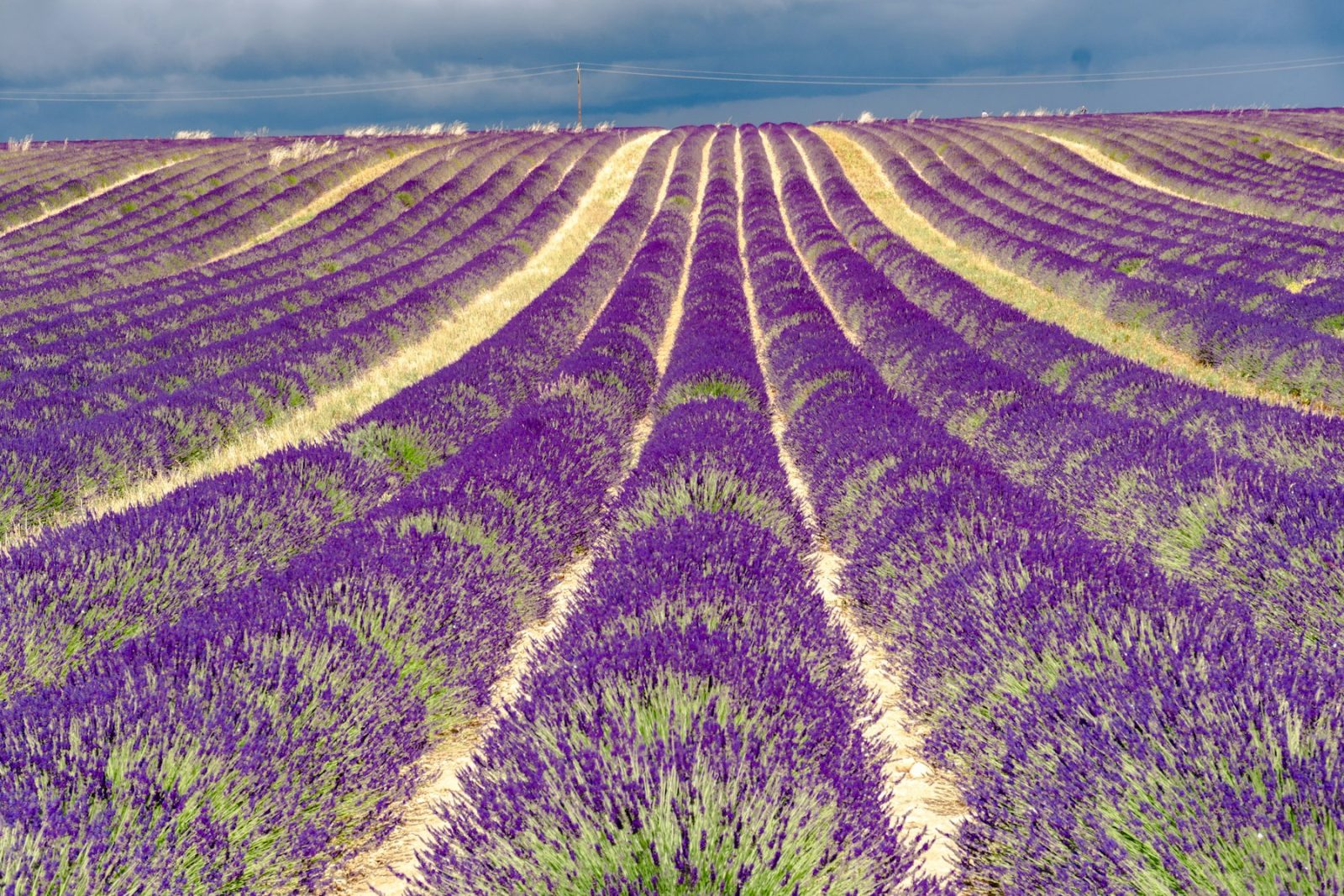
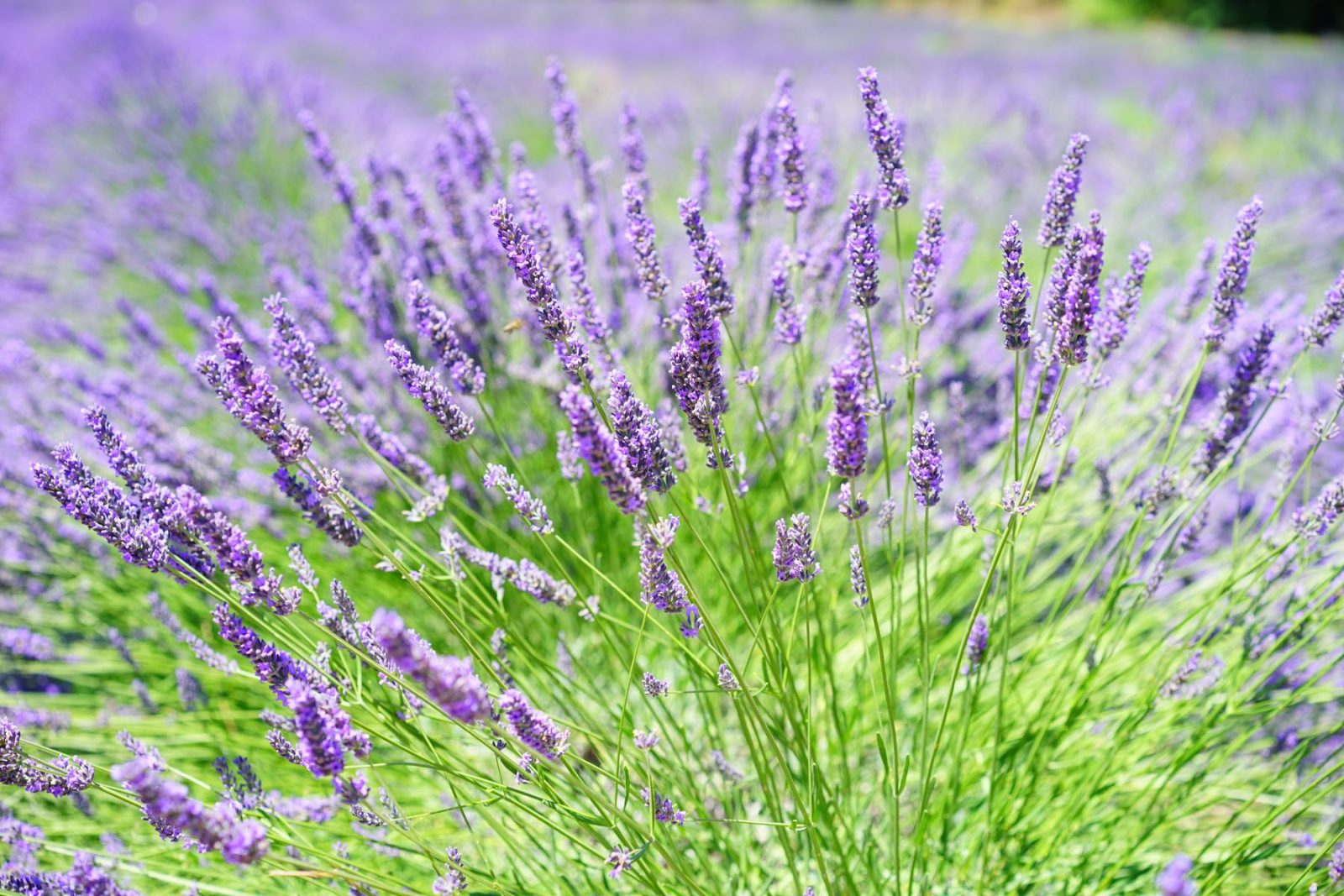
A sterile hybrid of true lavender and spike lavender, and the workhorse of the industry. It grows lower, yields perhaps four or five times more oil per hectare, and costs a fraction of the price. Those purple postcard fields you’ve seen photographed in Provence? Statistically, most of them are lavandin.
It smells sharper, more penetrating and more herbal than true lavender, with a distinct camphor bite. Not worse — different, and genuinely more useful in some contexts. It’s what gives a fougère its projection and its clean, laundered snap. It’s also what’s in your fabric softener.
And the “lavandin is the cheap stuff” sneer is lazy. Caron’s in-house perfumer Jean Jacques told Everfumed he uses lavandin oil deliberately in Pour Un Homme de Caron Le Matin, pairing it with CO2 ginger extract, while reserving “a very nice essence of lavender from Provence” for the evening flanker, Le Soir. Two materials, two moods, one house. That’s a perfumer using the palette properly, not cutting corners.
Lavandula latifolia — spike lavender
The wild card. Spike lavender grows lower and hotter, mostly in Spain, and its oil is a different animal: loaded with 1,8-cineole (the eucalyptus molecule) and camphor, with essentially no linalyl acetate at all.
It smells green, sharp, medicinal and cooling. Barely floral. If you’ve ever smelled a lavender that made you think “hospital” rather than “hedgerow,” you were probably smelling spike, or something leaning on it. Perfumers use it in small doses to blow the top off a composition and make it sparkle.
The Camphor Axis: What the Chemistry Actually Says
Here’s where it gets satisfying, because the numbers explain the arguments perfectly.
Four molecules do most of the work. Linalool is the soft, floral-woody backbone common to all three species. Linalyl acetate is the sweet, fruity, pear-like ester that makes lavender smell like a flower. Camphor and 1,8-cineole are the cold, medicinal, nose-clearing pair.
As you move from true lavender to lavandin to spike lavender, linalyl acetate collapses and the camphor/cineole pair explodes. That’s the axis. That’s the entire disagreement about what lavender smells like, expressed as a graph.
The data
Typical compositional ranges, per AromaWeb’s lavender/lavandin/spike comparison, which aligns with the ISO 3515 (true lavender) and ISO 8902 (lavandin) specification ranges summarised by Snowy River Lavender. Spike lavender figures are corroborated by Excellentia International’s spike lavender oil monograph.
| Constituent | True lavender (L. angustifolia) | Lavandin (L. × intermedia) | Spike lavender (L. latifolia) |
|---|---|---|---|
| Linalool | 25.0–38.0% | 24.0–37.0% | 34.0–50.0% |
| Linalyl acetate | 25.0–45.0% | 25.0–38.0% | 0–1.6% |
| Camphor | trace–0.5% | 6.0–8.5% | 8.0–16.0% |
| 1,8-cineole | 0–1.0% | 4.0–8.0% | 16.0–39.0% |
| Camphor + cineole combined | under 1.5% | 10–16.5% | 24–55% |
Where Lavender Actually Comes From
Provence is the romance, and it earns it — the plateau around Sault and Valensole is the spiritual home of fine lavender, and France remains the quality benchmark and by far the largest producer of lavandin, at well over a thousand tonnes a year.
But the tonnage crown for true lavender oil has sat with Bulgaria since 2014, when it first overtook France — a switch reported at the time by Fox News and Global News, and reaffirmed repeatedly since by Bulgarian industry reporting at Novinite. The Bulgarian growing region runs through the Kazanlak valley — the same terrain that made the country the centre of the rose oil trade.
Two caveats, because accurate beats tidy. First, the ranking is specifically about true lavender oil volume; if you count lavandin, France produces far more lavender-family oil overall. Second, it fluctuates — Bulgaria has had bad years, including a roughly 20% yield drop across 2024–25 after unseasonal frosts, and oversupply has periodically crushed prices there.
Beyond those two, you’ll find meaningful production in Spain (spike lavender, overwhelmingly), China, Ukraine, Moldova, and Tasmania, whose Bridestowe estate has built a genuine reputation for high-grade angustifolia.
Oil vs Absolute: The Same Flower, Two Materials
This is the bit most guides skip, and it’s the bit that will actually change how you read a note list.
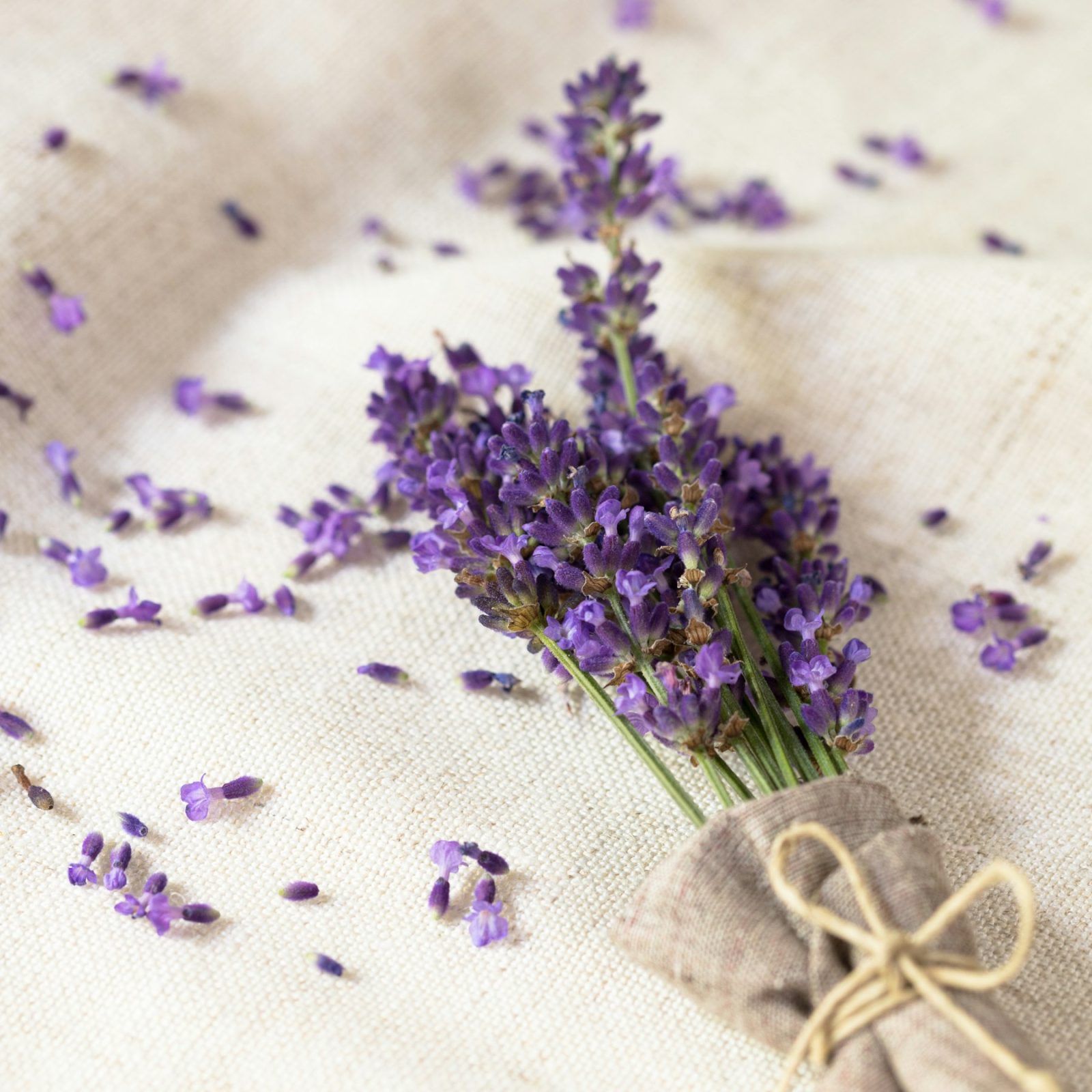
Lavender essential oil is steam-distilled. Heat and water vapour pull the volatile molecules out of the flowering tops. It’s pale, mobile, and smells bright, clean, aromatic and slightly medicinal — the smell you expect.
Lavender absolute is solvent-extracted instead: hexane or petroleum ether first produce a waxy concrete, then alcohol washing yields the absolute. It comes out a dark olive-green, viscous, and it smells markedly different — richer, sweeter, more tenacious, considerably less camphorous, with a pronounced dry hay character.
Why? Because steam distillation leaves the heavy stuff behind. Solvent extraction doesn’t. Crucially, Scentspiracy’s lavender absolute profile puts coumarin content in the absolute at roughly 1.8–14.7% — a family of molecules that simply don’t survive into the distilled oil in any quantity.
Read that again, because it’s lovely: the absolute arrives with coumarin already in it. The hay-sweet molecule that defines the fougère is natively present in the very flower the fougère is built on. Which brings us neatly to the main event.
Lavender and the Fougère
The fougère is the lavender–oakmoss–coumarin triad, and it is the backbone of masculine perfumery. Lavender supplies the bright aromatic top and the clean herbal spine; oakmoss supplies the damp, green, forest-floor depth; coumarin — the sweet hay-almond molecule associated with tonka bean — glues the two together and stops the whole thing from smelling like a hedge.
Houbigant Fougère Royale (1882, Paul Parquet) started it, and it did so using one of the first lab-made materials in commercial perfumery: synthetic coumarin. “Fougère” means fern. Ferns don’t smell of anything. Parquet invented an abstraction — a fantasy of what a fern ought to smell like — and in doing so invented modern perfumery’s most durable formula.
Nearly a century and a half later, the skeleton is unchanged. Perfumers just keep re-dressing it: with bergamot and geranium in the classical mode, with vetiver and sandalwood for woody weight, with patchouli for earth, or with a great slab of vanilla for the gourmand versions we’ll get to shortly.
And here’s the obvious thing the IFRA-restriction hand-wringers miss: the oakmoss curbs have hurt the classical fougère, no question. But lavender is the leg of the tripod that never got restricted. It’s why the genre survived at all.
How Lavender Behaves: Top, Heart, or Both?
Lavender is one of a small handful of materials that genuinely works in two positions, which is why perfumers love it.
In the top, it’s volatile and bright. The camphor and cineole flash off in the first ten to fifteen minutes, giving that cold, clean, slightly astringent opening lift. Use lavandin or a touch of spike here and you get real sparkle. Prada Luna Rossa is a textbook case — lavender absolute right at the top, over bitter orange.
In the heart, it’s a different creature. Once the camphor has burned away, what’s left is the linalool and linalyl acetate — soft, powdery, floral, faintly fruity — and that sits beautifully for two to four hours. This is where Le Mâle keeps its lavender, and why the scent reads as sweet rather than sharp.
In the base, lavender doesn’t really persist as itself. What lasts is the coumarin sweetness (especially from an absolute) and whatever the lavender has been married to — tonka, vanilla, oakmoss, tolu. A lavender fragrance that still smells of lavender at hour eight is almost certainly getting help from coumarin and dihydromyrcenol.
Practical upshot: if you sniff a lavender scent on a blotter for thirty seconds and dismiss it as medicinal, you’ve judged the top note and nothing else. Give it twenty minutes.
Lavender’s Gender Problem — and the Gourmand Fix
Lavender has had two entirely separate reputations running in parallel for over a century, and they’ve never really been reconciled.
In Britain, lavender is feminine and, frankly, elderly. Lavender water, linen sachets, drawer liners, Yardley’s English Lavender on a grandmother’s dressing table. The name itself comes from the Latin lavare, to wash, and the association with clean laundry has never let go. That’s a heritage of soap, not seduction.
In France, lavender is masculine. It’s the fougère, the barbershop, the aftershave slap. Caron’s Pour Un Homme (1934) built an entire identity on lavender over vanilla and is routinely called the first men’s fragrance — a claim worth treating with caution, since Guerlain’s Mouchoir de Monsieur (1904), Knize Ten and Worth Pour Homme (1932) all got there first. Groundbreaking, yes. First, no.
Neither tradition was actually first to the idea that carries the note today. Guerlain’s Jicky (1889, Aimé Guerlain) had already set lavender against vanilla, tonka and resins, in what is often called the first abstract perfume — a scent not pretending to be any single flower — and it is among the oldest fragrances still in continuous production. That lavender-and-vanilla handshake is the ancestral gesture, and Pour Un Homme is its most disciplined restatement.
Which is the interesting bit, because that pairing turned out to be the blueprint for the biggest shift in the note’s modern history: gourmand lavender.
Francis Kurkdjian’s Le Mâle (1995) is the hinge. Take the fougère skeleton, keep the lavender in the heart, then load the base with vanilla, tonka and amber until the thing reads as edible. It sold in absurd quantities and it rewrote what a masculine fragrance could be — sweet, soft, almost cuddly, and still built on the most traditional accord in the book.
Everything since has flowed from that: Serge Lutens’ incense-and-tonka lavenders, Chanel putting a deliberately gender-ambiguous fougère in Les Exclusifs, YSL selling a lavender-forward fragrance to women as a mainstream blockbuster. The note that used to signal “man’s aftershave” or “grandmother’s wardrobe” now mostly signals neither. Good. It was always too interesting to belong to one shelf.
Where to Smell It Next
Understanding the note is one job; finding a bottle is another, and we keep the two apart. If you’ve read this far and want lavender on skin rather than on the page, the shortlist lives in our roundup of the 16 best lavender fragrances — the classical fougères, the gourmands, the cold incense-and-iris interpretations and the modern florals, each with its structure explained. Our YSL Libre review goes deeper on the release that did most to move lavender’s cultural position since Le Mâle, and the fougère fragrance guide covers the wider family this note holds up.
What Pairs Well With Lavender
- Coumarin and tonka — the classic. Sweetens the herbal edge and adds tenacity.
- Oakmoss — the other fougère leg. Damp green depth beneath the brightness.
- Bergamot and citrus — amplifies the fresh lift; standard fougère opening.
- Vanilla — the gourmand route, from Pour Un Homme to Le Mâle.
- Geranium and rose — rounds off the camphor and pushes lavender feminine.
- Clary sage, rosemary, mint — doubles down on the herbal, very green.
- Iris — powdery, cool, slightly sad; the route to an ashen, melancholy lavender rather than a comforting one.
- Sandalwood and vetiver — woody grounding that lets the lavender float above.
- Incense and smoke — the modern niche move; makes lavender austere.
Final Thoughts
Lavender’s reputation problem is really a labelling problem. Ask someone whether they like lavender and they’ll answer based on whichever species happened to be in the last thing they smelled — the sweet floral angustifolia, the sharp laundered lavandin, or the eucalyptus-cold spike. Three plants, one word, endless arguing.
Learn which one you’re smelling and the note opens right up. It can be the cleanest thing in a wardrobe or the sweetest; it can read 1882 or 2019; it can smell like a barbershop, a linen drawer or a dessert. Very few materials cover that much ground.
So the useful question isn’t whether you like lavender. It’s which lavender you were handed, in what concentration, and where in the structure the perfumer decided to put it. Answer those three and the note stops being an argument.
Lavender FAQs
What does lavender smell like in perfume? Fresh, herbal and sweetly floral, with a clean soapy quality and a cool camphor edge. In perfume it usually sits in the top or heart, giving brightness and an aromatic spine, and it softens into something powdery and slightly fruity as the sharper molecules evaporate.
Why does some lavender smell medicinal? Camphor and 1,8-cineole. True lavender contains almost none (under 1.5% combined), lavandin has around 10–16%, and spike lavender can run past 50%. The more of those two, the more “hospital” and less “flower” it smells.
Is lavender masculine or feminine? Both, and it depends entirely on which country’s tradition you grew up in. British lavender water reads feminine and old-fashioned; French fougères read masculine and barbershop. Modern releases like Chanel Boy and YSL Libre have made the question mostly redundant.
What’s the difference between lavender and lavandin? Lavandin is a hybrid of true lavender and spike lavender. It yields far more oil per hectare, costs much less, and smells sharper and more camphorous. True lavender is sweeter, softer and more floral. Both are legitimate perfumery materials with different jobs.
Which country produces the most lavender oil? Bulgaria has led the world in true lavender oil volume since 2014, though France still dominates lavandin production and remains the quality reference for fine lavender from Provence. Yields swing year to year with the weather.
Does lavender last long on skin? Not on its own — it’s a top-to-heart material, typically giving two to four hours. Lavender fragrances that last all day are relying on coumarin, tonka, vanilla, woods or musks in the base to carry it.
What is a fougère, and why is lavender in all of them? A fougère is built on lavender, oakmoss and coumarin. Lavender provides the fresh aromatic top and the herbal structure; without it the accord doesn’t exist. Read our full fougère fragrance guide.
Is lavender absolute better than lavender oil? Not better — different. The absolute is solvent-extracted, darker, sweeter, hay-like and far less camphorous, and it carries coumarin that distillation leaves behind. The oil is brighter and cleaner. Perfumers pick according to whether they want lift or richness.
Related on Everfumed
- 16 Best Lavender Fragrances: Fresh, Clean & Aromatic
- What Is a Fougère Fragrance?
- Best Aromatic Perfumes
- The Fresh Fragrance Family
- 24 Best Oakmoss Scents
- What Does Tonka Bean Smell Like?
- An Interview with Caron Perfume’s Nose: Jean Jacques
- YSL Libre Perfume Reviewed
- All Fragrance Notes

Selena Marc is a fragrance enthusiast, freelance writer, and dog mom living in Houston, Texas. When she's not writing about her favorite new perfumes, you can find her enjoying yoga or a morning hike.